Vegan cooking is remarkably easy to learn, and delivers all sorts of unexpected payoffs. While most hobbies drain your bank account, learning to cook will save you piles of cash. Home-cooked dishes cost a small fraction of what you’d pay for restaurant meals or frozen foods. So when you consider all the money you’ll save, it’s almost as if you’re getting paid to learn how to cook.
By doing your own cooking, you’ll also enjoy fresher and tastier meals made with higher-quality ingredients. As your cooking skills develop, you may grow to love the calming, meditative time spent in the kitchen. Simple tasks like starting rice or chopping vegetables offer relaxing moments after a busy day.
You can easily master the basics of vegan cooking. Unfortunately, many novice cooks don’t know where to begin. So that’s where this guide comes in. I will take you through all the essentials, and show you how easy it is to cook delicious vegan meals.
Grocery Shopping
Doing your own cooking gives you absolute control over what goes into your food. Great meals depend on great ingredients. So stepping up your grocery shopping skills is a big part of learning how to cook vegan.
Savvy chefs take their shopping as seriously as their cooking. They know the best places to buy a hundred different things, from olive oil to salad greens.
For detailed advice on buying vegan groceries, please read the grocery shopping section of my How to Go Vegan guide. It explains how to select the best possible food from supermarkets, natural food stores, farmers’ markets, and online grocers.
Let’s now go through the main foods you’ll purchase for your cooking.
Vegetables, Squash, & Tomatoes
Eating a lot of vegetables requires cooking a lot of vegetables, which in turn means buying a lot of vegetables. With that in mind, I created a simple rule for myself that has improved my diet immeasurably: when I’m out grocery shopping, once I am ready to wheel my shopping cart to the checkout aisle I take a last look inside. Did I purchase a nice assortment of fresh fruits and vegetables? If I’ve come up short, I head straight back to the produce department to pick up a few more items.
As your vegan cooking skills progress, you’ll get familiar with every conceivable sort of vegetable. But since you must start somewhere, let’s run through the most popular choices:
Broccoli, Brussels Sprouts, Cauliflower & Cabbage
All of these are in the cruciferous family, and they are ideal for roasting or stir-fries. Numerous studies indicate that consumption of cruciferous vegetables may reduce cancer risk. Be sure to peel the stalks and stems of your broccoli before cooking. Cabbage is the main ingredient in coleslaw. Broccoli and cauliflower florets are delicious when served alongside hummus.
Potatoes and Sweet Potatoes
Baked potatoes or sweet potatoes are the perfect food for a cold day. Just scrub, stab a few times with a fork (to allow steam to vent), and throw into your oven heated to 175° C (350° F). Baking requires 40 to 70 minutes depending on size. Alternately, diced potatoes or sweet potatoes are terrific in stir-fries.
Sweet potatoes are more nutritious than regular potatoes, and they have a lower glycemic index as well. Many supermarkets sell oven-baked sweet potato fries in the frozen foods section, which make for a convenient and healthy snack or side-dish.
Leafy Greens
These are among the most nutrient-dense of all foods, so it’s wise to eat some every day. Go for dark, rich colors since that signals more nutrients. For calcium’s sake, choose kale and bok choy instead of spinach or collards. You’ll thereby minimize oxalates, which can inhibit calcium absorption and may also cause kidney stones.
If you want to substantially boost your greens consumption, stir-fry them. They’ll thereby cook down to a tenth of their previous volume, which makes it easy to eat substantial amounts. Cooking also improves digestibility.
Onions
A mainstay of many cuisines, especially Mexican, Indian, and Italian cooking. Most onions are pungent, so they’re generally diced and cooked. Buying onions in every available color will liven up your meals—red, yellow, and white varieties are widely available. One popular variety, the Vidalia, is less pungent than other onions and sweet enough to eat raw. Sliced thinly, they’re excellent in sandwiches or salads.
Squash
Botanically a fruit, but for cooking’s sake squash are more sensibly treated as a vegetable.
There are two types of squash: summer and winter. Summer squash are harvested in mid- or late summer, and stay fresh for a week or two if refrigerated. The most common summer squash is zucchini, and you’ll also find bright yellow crooknecks plus another yellow variety that resembles a flying saucer. Chopped summer squash is excellent in stir-fries. Texture and flavor are practically identical no matter which varieties you choose.
Winter squash are actually harvested in the autumn, but will keep until spring if stored in a cool, dark place. Be careful slicing open winter squash, and always use a sharp knife, as their hardness can cause your knife to slip while cutting. Many supermarkets therefore sell winter squash pre-cut.
Butternuts are the most common kind of winter squash, but their flavor can’t compare to a remarkably ugly Japanese squash variety named kabocha. Despite appearances, kabocha has my vote as the world’s tastiest stir-fry ingredient. Any sort of winter squash is outstanding cubed and steamed, then served alongside chopped seared greens seasoned with your favorite spices.
Tomatoes:
Nothing compares to a locally grown vine-ripened summer tomato. Avoid buying tomatoes out of season transported from far-off places, since you’ll usually get poor texture and flavor.
Pantry Items
Load up your pantry with imperishable foods and you’ll always have delicious things ready to eat. Plus, a well-stocked pantry can help you get through extended power outages or natural disasters.
A natural food store’s bulk department is the perfect place to buy most pantry items. You can save a small fortune buying your foods in bulk rather than packaged. Here are some staples that are nice to have on hand:
- Nuts
- Beans
- Rice
- Flour
- Dried fruit
- Breakfast cereal and granolas
- Chocolate
- Pasta and noodles
- Nut butters and tahini
- Whole coffee beans
You can reliably judge the quality of your natural foods store by the quality of its produce section and bulk department. If you lack a good natural foods store nearby, Amazon.com can fill in the gaps. My grocery page features the best vegan staples sold by Amazon.
Herbs, Spices, & Seasonings
Every skilled cook is familiar with a variety of herbs, spices, and other seasonings. These concentrated flavors turn wholesome foods into delectable meals. Before we explore this topic, let’s define terms.
Herbs are the leaves and sometimes flowers or stems of various fragrant plants. Italian cooking in particular features loads of herbs, especially oregano, marjoram, basil, and rosemary. Note that while most herbs are sold dried, fresh herbs are even more flavorful. Many serious cooks therefore grow their favorite varieties in a window sill herb garden. Just use scissors to snip off whichever herbs your recipe requires.
Spices typically carry stronger flavors than herbs. Most spices come from the seeds or seed pods of various plants. If Italian is the cuisine most heavily based on herbs, Indian is the cuisine most reliant on spices. The most common Indian spices are cumin, coriander seeds, turmeric, and mustard seeds (all of these typically go into the region’s quintessential spice mix: curry powder). Cardamom, which is often used to flavor basmati rice, has my vote as the most appealing of all spices. It has an indescribably special flavor and aroma unlike any other spice.
Seasonings is a broad term that encompasses herbs, spices, and every other concentrated source of flavor. Common seasonings include salt, tamari, lemon juice, hot sauce, bouillon cubes, vinegar, and pickled vegetables.
A few well-chosen seasonings can elevate your cooking from good to great. If you’re new to vegan cooking, start with a few herb and spice mixes. Popular spice mixes include Mexican, Indian, Caribbean jerk, and barbecue. The most useful herbal mix is Italian seasoning, which contains all the classic herbs of that cuisine.
Spice Buying Advice
Pre-ground spices are perfect for a casual or time-strapped cook. Gourmet chefs insist on freshly-grinding their spices for the same reason that coffee connoisseurs demand freshly-ground beans. Just like coffee, the essential oils in spices begin to volatilize upon grinding. While the smell of freshly-ground coffee and spices is heavenly, that very smell means the finest flavors are escaping with each passing hour. This also explains why pepper mills are so popular, since pre-ground pepper quickly loses its most special flavors.
Pre-ground spices are fine when time is limited, whereas freshly-ground spices deliver magnificent flavors. If you’re short on time, by all means use a spice-mix. Grind spices using a mortar and pestle or a spice grinder, and you’ll consistently kick your meal’s flavors up a notch.
Your natural food store’s bulk department offers one of the best places to buy herbs and spices. Buying spices in bulk can save you at least 50 percent over buying them prepackaged in small containers.
Fats and Cooking Oils
Although often vilified, there is no reason to fear fats and oils. Many nutrition experts recommend that they provide at least 20 percent of daily calories. Fats are a vital source of energy, and foods that contain significant amounts of fat are great at staving off hunger. Plus, fats can help stabilize erratic blood sugar levels.
Fat also deepens the flavors of foods, in part because when oils coat the tongue your food’s flavors can linger. Since fats provide a concentrated source of calories—which can make the difference between survival and starvation in times of famine. Our bodies doubtless evolved to take greater satisfaction from fattier meals.
Cooking Oils
Many people keep only one kind of oil in their kitchen. Limiting yourself in this way is a huge missed opportunity. Here are four oils worth always having on hand:
High oleic safflower oil. Perfect for higher-temperature cooking since it’s resistant to scorching.
Olive oil. Filtered olive oil is great for lower-temperature cooking. Always buy “extra virgin” olive oil since anything else is substandard. Unfiltered olive oil should not be heated, but it offers a strong, peppery flavor that, mixed with a dash of balsamic vinegar, makes a delicious dip for freshly-baked breads. It’s also a terrific main ingredient for homemade salad dressing.
Sesame oil. An inexpensive way to jazz up any dish, especially stir-fried vegetables and Asian-style noodles. Sesame oil has a very low scorching point, so it’s best added to food right before serving. It has strong flavor, so just a squirt of oil goes a long way. Get the roasted variety for a delicious smoky taste.
Coconut oil. Excellent for frying since it doesn’t scorch at higher temperatures. Don’t use it as your everyday cooking oil though, since the fat is even more saturated than lard or tallow.
Vegan Butters and Margarines
Numerous brands of vegan butter are excellent on toast, bagels, and baked potatoes. These products are also excellent for making cookies, and for other vegan baking recipes. All the Earth Balance buttery spreads and buttery sticks taste great (one of their spreads even comes in a Whipped Organic version). And Miyoko’s Kitchen makes a Cultured Vegan Butter that is heavenly.
If you want to tackle an involved but rewarding vegan cooking project, try making Bryanna Clark Grogan’s palm oil free vegan butter at home.
How to Cook Vegan
Now that we’ve covered the key ingredients, let’s get cooking!
The most common mistake made by newbie cooks is choosing exactly the wrong first cookbook. A high percentage of cookbooks feature elaborate recipes that are too time-consuming for everyday use. If you’ve got young children or a demanding schedule, you’ll want to spend minutes rather than hours in the kitchen.
Fortunately, you can access an abundance of fantastic and simple vegan recipes. Many vegan cookbooks are entirely devoted to quick and easy recipes. Here are four excellent recent choices:
- Fast Cheap Easy Vegan, by Sam Turnbull
- Easy Vegan Home Cooking, by Laura Theodore
- Super Easy Plant-Based Cookbook, by Kathy Davis
For more choices, please see the list of Easy Everyday Cookbooks on my Vegan Cookbooks page.
New Recipes Teach New Skills
New recipes can teach you new skills that you can put to use in a variety of ways. For instance, an Indian-style chana masala recipe will require you to chop and sauté onions. You can later use your newfound onion prep skills to jazz up your next batch of refried beans or spaghetti sauce. As another example, making Chinese-style stir-fries will give you a keener sense of how to properly pan-fry a variety of vegetables.
Pilots measure their expertise by counting up the number of hours they’ve spent airborne. You’ll likewise find that your kitchen skills grow with every new recipe you try. As you get more recipes under your belt, it won’t be long before you become comfortable cooking just about anything.
Vegan Cooking Basics
Any vegan cookbook can improve your cooking abilities. But you can also learn how to cook sensational meals without ever using a recipe. Specifically, I regard the following dishes as “core foods” that are ideal for beginning cooks:
- Stir-fried vegetables
- Salads
- Roasted vegetables
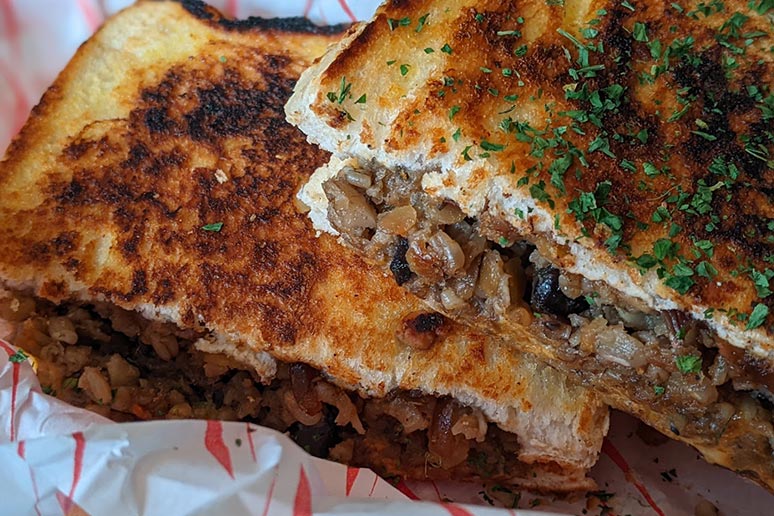
- Sandwiches and wraps
- Soups and stews
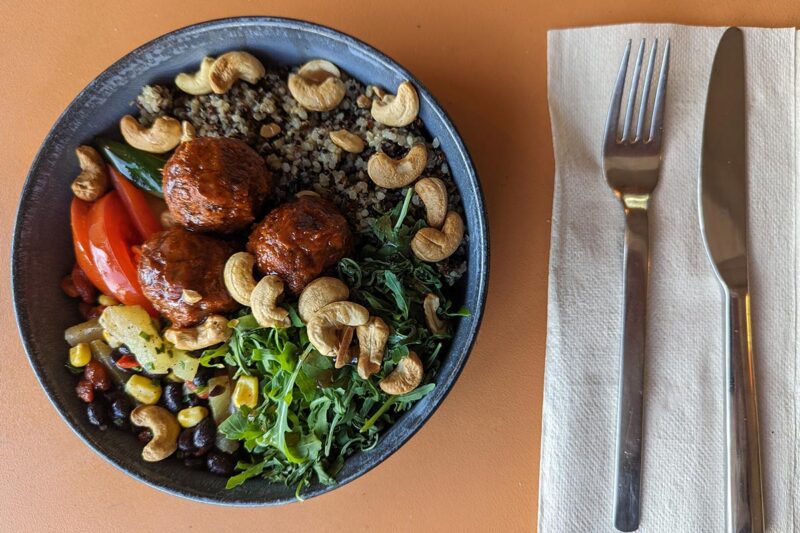
- Bowls
Not only are these meals easy to make, they can all be prepared in countless ways. Today’s stir-fry might be sweet potatoes, purple cabbage, and tofu served over brown rice and topped with peanut sauce. Tomorrow’s might be bok-choy, tempeh, and peppers in a tamari-ginger sauce, served over quinoa.
In addition to the core foods I’ve featured above, you should absolutely learn how to prepare rice and beans (my links provide complete cooking directions). Rice and beans are the perfect match when served together, and rice is also excellent as a bed for stews, stir-fries, and roasted vegetables. Beans are nutritional powerhouses. They’re also remarkably cheap, delicious, and can be prepared in a multitude of ways.
Exploring World Cuisines
A substantial portion of the world’s population eats a mostly plant-based diet. That’s largely because, throughout history, few people could eat a diet heavily based on animal products. Refrigeration didn’t exist, so meat spoiled rapidly when transported or stored. Most of the world’s great cuisines therefore include popular dishes that are either vegan or can easily be prepared that way.
Here are some of the world’s most popular vegan-friendly meals:
- India: chickpea curries or dal with roti (flat bread)
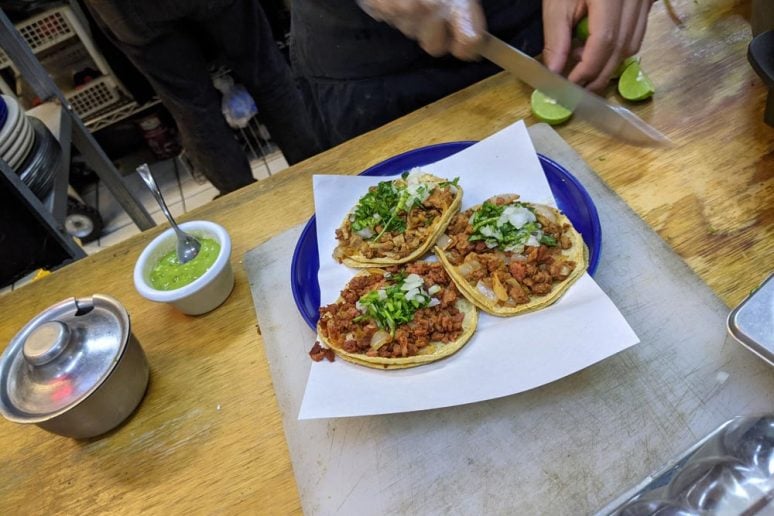
- Mexico: rice, beans, salsa, and guacamole served with corn tortillas
- China: stir-fried vegetables and tofu served over rice
- Italy: spaghetti with marinara sauce
- Middle Eastern: falafel, hummus, or baba ghanouj served with vegetables in pita
If your first vegan cookbook should focus on quick and easy recipes, perhaps your second cookbook ought to specialize in your favorite regional cuisine. My recommended cookbooks page features more than twenty international vegan cookbooks, each covering dishes from a different part of the world. You can also check out my vegan-friendly cuisines page.
Many popular international dishes take almost no time to master. Mexican, Italian, and Chinese cuisine features some of the easiest vegan recipes on the planet.
Outfitting Your Kitchen
If you eat nothing but sandwiches, you’ll need little more kitchenware than a knife and a cutting board. But for any real cooking, a few inexpensive items will take you a long way. So let’s take a look at the most useful items.
Must-Have Kitchenware
Kitchen Knives:
You can get years of good use from an inexpensive toaster, coffee maker, or blender. But no matter how limited your budget, invest in good quality knives. A home cook really only needs three:
- Chef’s Knife: By far, the most important tool in your kitchen.
- Paring Knife: Also called a utility knife. Suitable for peeling produce and general cutting tasks.
- Bread Knife: Not only for bread, these knives are the best way to cut tomatoes without smooshing them.
I recommend a Victorinox chef’s knife with a Fibrox handle. I’ve spoken to numerous chefs who favorably compare this model to high-end professional knives costing triple the price. After you get accustomed to a quality chef’s knife, the next time you find yourself using a dull and mediocre knife you’ll be aghast at the unpleasantness. While you’re at it, pick up a good paring knife plus a bread knife.
If you cook regularly, get your chef’s and paring knives sharpened once or twice a year. Many flea markets and farmers’ markets feature a heavyset bearded guy wearing overalls who sharpens knives out of the back of his pickup truck. Or you may have a knife or cutlery store in town that can do the job.
You can also use a cheap honing steel between sharpenings to keep your blades sharp. In contrast to knife sharpening, which requires significant practice, you can hone a blade in a couple minutes and it’s a skill anyone can quickly learn.
If there’s ever a time to choose quality over quantity, it’s when purchasing knives. Don’t succumb to the temptation of buying one of those cheap seven-knife sets. You’ll be much happier if you spend the extra money to buy quality versions of the three knives recommended above.
Cutting Boards
I recommend purchasing a BPA-free polypropylene cutting board. These boards can withstand vigorous scrubbing and are dishwasher-safe, so they are easy to clean and disinfect. And unlike wooden cutting boards, polypropylene won’t absorb onion and garlic odors. Go with a larger-sized board since it’s irksome to chop vegetables on a cramped surface.
Pots and Pans
Resist the temptation to buy a cheap set of nonstick cookware. In particular, avoid Teflon pans, since they emit toxic gases if overheated and are the least durable cookware you can buy. Their nonstick coating inevitably flakes off into your food—just look at an old Teflon pan and see for yourself. And never buy Teflon if you have a bird, as Teflon fumes are famously lethal to birds.
I think of Teflon as a 1960s miracle surface that has been rendered obsolete by newer and far superior materials. Today’s ceramic polymer cookware is a much better choice. These polymers are nearly as slick as Teflon, but vastly more durable. Moreover, they won’t release poisonous vapors if overheated. To avoid scratching, never use metal utensils in ceramic cookware—opt for melamine or silicone spatulas instead.
Stainless steel pots and pans are a great choice. They’re incredibly durable, and easy to keep gleaming and gorgeous. Buy a large stainless steel pot for boiling pasta or making soups, and a smaller saucepan. You’ll also need a skillet and perhaps also a wok for all sorts of things, including sautéing vegetables.
Unfortunately stainless steel skillets heat slowly and unevenly. This is not problem when it comes to stock pots and kettles since your soup or cooking water will evenly distribute the heat. I consider a mid-sized stainless kettle ideal for boiling spaghetti and other pasta.
Copper-bottomed stainless steel cookware is beautiful and unsurpassed when it comes to heating food evenly, but I’m still not a fan. This cookware must be scrubbed with copper polish after use, which is three minutes of your life you can’t get back. Premium stainless steel cookware has a copper core sealed inside its base, which gives you the best of all worlds—the core provides excellent heat distribution without demanding polishing.
Here are my picks for high quality mid-priced stock pots, skillets, and woks:
- Cook N Home 5 Quart Stock Pot
- Cuisinart Saucepan
- Mueller Stone Frying Pan
- Cuisinart 14″ Stainless Wok
Salad Spinners
No kitchen item sounds as frivolous as a salad spinner, yet here I am recommending them as a “must have” item. What gives? What gives is that eating plenty of vegetables one of the best things you can do for your health, and salads offer the easiest way to boost your vegetable intake.
The trouble is that sliced raw unseasoned vegetables aren’t enticing when it comes to flavor, so a good salad needs a flavorful dressing. If your salad greens are still wet after being rinsed, your dressing will run right off them into an unappetizing watery pool at the bottom of your salad bowl. To prevent this from happening, just get a salad spinner. The first time you use your salad spinner you’ll be amazed by how much water a quick spin will throw off.
Can Openers
Skip the whiny electrics unless you suffer from arthritis. A quality hand-cranked model is the way to go, and they’re much easier to clean.
Spatulas & Grill Turners
Choose a few sizes and styles made from metal, silicone, or melamine. Again, never use a metal spatula in a ceramic or Teflon pan (and don’t buy Teflon pans in the first place). Also, don’t buy any nylon or plastic spatulas, since you’ll inevitably leave it in the pan too long and it’ll melt.
Measuring Cups & Spoons
You’ll need a set to follow most cookbook recipes.
Other Popular Items for Vegan Cooking
Once you’ve outfitted your kitchen with the essentials covered above, here are some of the most useful appliances and cookware items.
Instant Pots
Probably the biggest kitchen innovation since the food processor, and frankly a lot more useful. Instant Pots reduce cooking time for many meals to 20 minutes or less. They cut costs by replacing several appliances, including a pressure cooker, slow cooker, and rice cooker. In the process, these devices can free up a great deal of counter space.
If you’re only going to splurge on one kitchenware item, make it an Instant Pot—nothing else has so many uses. Buy the 3 quart model if you usually cook for one to three people, or 6 quart model for larger families. You can get the most out of this appliance by purchasing Nisha Vora’s terrific, The Vegan Instant Pot Cookbook.
Blenders
Good for smoothies made from soy milk and frozen fruit. An inexpensive model will do most jobs fine, but if you can afford it, consider purchasing a Blendtec or Vitamix. These appliances are like a blender on steroids, and they’re almost as powerful as a lawn mower. They can prepare all sorts of supremely healthful items that are beyond the capacities of a regular blender.
If you enjoy making soup, an immersion stick blender is practically a must-have. They enable you to blend soups directly in the pot, so there’s no extra cleanup. You can also use them to prepare mixed drinks and hummus.
Microwave Ovens
Perfect for reheating food, and vastly more energy-efficient than a conventional oven. Also the best way to heat up frozen burritos. Here’s my favorite little-known use: for a cheap and spicy protein-rich snack, microwave a papadum (sold at Indian groceries) for 30 seconds or until its texture turns bubbly. A 900 watt microwave equipped with a built-in turntable will cover most people’s needs perfectly.
Toasters
Slot toasters are faster and make much better toast than do toaster ovens. I’m adamant that toast beats plain bread for most types of sandwiches.
Electric Kettles
Among the cheapest appliances you can purchase. Once you’ve owned an electric kettle, there’s no going back to a stove-top kettle—they boil water in one-third the time!
Electric Grills
While marketed mainly to hamburger enthusiasts, electric grills also offer an easy and delicious way to grill vegetables. Get a big one since small models are only really appropriate for grilling burgers. This Hamilton Beach model features removable plates for easier cleaning.
Air Fryers
These appliances deliver the crunch and texture of fried food without all the fat. Air fryers are great for vegan favorites like French fries, tempura, and falafel. There are several vegan cookbooks devoted entirely to air fryers.
Food Processors
Vegans chop a lot of vegetables, and nothing handles that task as quickly as a food processor. The more people you’re feeding, the more sense a food processor makes. When prepping small batches of food, the time saved with a food processor isn’t worth the added cleanup time. When it comes to small jobs, there’s nothing a food processor does that you can’t quickly accomplish by using a knife or a grater.
But for large batches, a food processor saves enormous amounts of time you’d spend laboriously chopping, slicing, or grating. If a full-sized food processor is too much horse for you, consider picking up a mini food chopper. They’re perfect for small chopping needs, and cleanup is super quick.
A Burr Grinder and an Aeropress
Great coffee depends on two factors. First, you must grind your beans uniformly. And second, you can’t allow the water to make prolonged contact with the coffee grinds. An inexpensive burr grinder (manual or electric) plus an Aeropress accomplishes both requirements.
Bread Makers
A bread maker might be the most satisfying appliance you could own. It takes just two minutes to start a loaf of bread, and clean-up time is practically nothing. Plus, your whole house will smell wonderful!
Slow Cookers
A no-fuss way to prepare satisfying soups and stews, slow cookers are surprisingly cheap. If you don’t own an Instant Pot and live in a place with frigid winters, they’re practically a must-have. Several vegan cookbooks are devoted entirely to slow-cookers, including Robin Robertson’s excellent Fresh from the Vegan Slow Cooker.
Rice Cookers
It’s easy enough to cook rice in a pot with a lid. But if you make rice several times a week you may want to invest in a rice cooker. Not only will your rice will come out perfectly every time, you’ll have one fewer distraction when you’re cooking the rest of your meal. Although an Instant Pot can cook rice, a dedicated rice cooker does a better job.
Vegan Cooking Basics: Essential Information
I’ll conclude this guide with some valuable habits worth cultivating. This information will help you become more efficient in the kitchen, and possibly prevent a wrecked meal or two.
Anyone who cooks regularly will pick up dozens of random tips and tricks over their lifetime. For the sake of getting started, here are eight of the most valuable things to know:
- Take an inventory of your refrigerator weekly and your pantry and freezer monthly, making a point to use foods before they pass their peak.
- When bringing water to a boil, always cover the pot. You’ll save time and dramatically cut energy use. Better yet, use an electric kettle to heat the water, and then pour it into your pot.
- When you buy food in glass jars, soak off the labels in warm water and re-use these jars for storing everything from beans to rice to leftovers. Plastic storage containers can leach chemicals into your food, so reused glass jars are the way to go.
- Whenever possible, don’t put your most perishable foods in the refrigerator—prepare them as soon as you bring them home.
- Onions, garlic, and ginger are three classic seasonings of Asia and India, and they’re wonderful in soups and stir-fries. If you enjoy these flavors, always keep some onions and fresh ginger in your refrigerator, and a couple bulbs of garlic on your counter.
- Does your home have a sunny window? If so, consider planting a windowsill herb garden. If you have a yard and live in a place where temperatures don’t drop below freezing, plant a lemon tree so you’ll always have fresh lemons on hand to season your hummus and salads.
- Speaking of seasonings, a few extra jars of dried herbs, Indian jarred pickles, hot sauce, and so forth can make all the difference in jazzing up your meals.
- Never put dirty pans in the sink to clean later without first filling them with warm soapy water.
With those tips out of the way, let’s move onto general information about major kitchen appliances.
Ovens
The usual baking temperature for most food is between 350° and 425° Fahrenheit (roughly 175° Celsius to 220° Celsius.)
If you’re reheating last night’s pizza or casserole, the best temperature is just 200° or 225° F. Low temperatures work best for leftovers because your food has already been properly cooked, and now only needs to be warmed up. Often the best way to reheat vegetable-based meals is to use a casserole dish with a glass top, and toss in a few teaspoons of water. Microwave ovens can reheat leftovers much more quickly than a conventional oven, and they won’t dry out your food. When microwaving, cover dishes that contain soups or sauces to avoid spattering. A vented microwave lid is a worthwhile purchase.
Many ovens feature a broiler compartment. Broiling temperatures are usually between 500° and 550° F, which means you must watch your food like a hawk—in the space of two minutes your food can go from under-cooked to burnt.
Stove Tops
Gas stoves are standard in restaurant kitchens since they allow instantaneous heat adjustment. Unfortunately, gas stoves increase indoor pollutant levels. Children who live in homes equipped with gas stoves suffer from higher rates of asthma.
Plainly, for health reasons, electric stoves and ovens are the way to go.
Conductive vs. Induction Stoves
Stoves that heat with electric conductive elements heat up and cool down slowly—if your pot starts boiling over, you can’t just spin the dial to instantly lower the heat. So, if possible, avoid conventional electric coil or smooth top conductive ranges. They’re just terrible for cooking. Plus they’re a hazard for cats who don’t respect wishes about staying off kitchen counters.
Recently, a more advanced electric stove technology has emerged based on induction (as opposed to hot electric coils that impart heat through conduction). Induction stoves are far superior to conventional electric stoves, and I even prefer them to gas stoves. When it comes to quickly adjusting temperatures, induction stoves are nearly as responsive as gas. They’re both safer and easier to keep clean than gas or electric conduction stoves.
On top of all that, once you remove your cookware from an induction stove, the stove-top powers off and cools down immediately. Yet induction stoves can nevertheless heat up a pan or skillet almost as quickly as gas. The one limitation of induction stoves is that you must use ferrous-metal cookware—all-aluminum pans won’t heat up (instead use cast iron, stainless steel, and most cookware coated with nonstick ceramic polymers). I’ve spent months cooking my meals in a ceramic-lined nonstick skillet on an induction stove, and I consider this the ideal combination for home use.
If your stove’s heat goes from 1 to 10, you’ll usually cook food between 2 and 6 (dial settings vary from one stove to the next, and many stoves get sufficiently hot for most uses at 3 to 4). Higher temperatures are for boiling water or rapid browning. The lowest setting is best for keeping the food warm prior to serving.
Knife Skills
Gaining competence with a chef’s knife is fundamental to almost everything you do in the kitchen. It’s a skill that requires time and practice to develop. Becoming adept with a chef’s knife requires about as much practice as getting halfway decent at hitting a golf or tennis ball. If you’re a competent amateur cook and then watch a professional chef go to work doing something as basic as chopping an onion, you’ll likely be amazed by the level of skill on display.
Luckily, you’ve got an asset that yesterday’s aspiring chefs didn’t: YouTube videos. YouTube features tons of kitchen tutorials, and a terrific place to start is this one showcasing basic knife skills.
Baking
Baking, especially where breads, pies, and cakes are concerned, is an entirely different animal from general stove-top cooking and most other food preparation. Oftentimes, people who are only mediocre cooks have a real knack for baking, whereas some great cooks can’t bake to save their lives.
Baking is a much fussier task than most other forms of cooking. With stove-top cooking, improvisation is the name of the game. You can toss in an extra chopped onion or experiment with new spices with no worries that your stew or stir-fry will be destroyed. But futzing with the proportions laid out in a cake recipe invites disaster. In fact, baking recipes are so sensitive that recipes that turn out perfect at sea-level must be rejiggered for use at high altitude.
Start with Cookies
If you want to try your hand at vegan baking, start by making vegan cookies, since cookies are the simplest of all baked items. Once you can reliably churn out a batch of delicious vegan cookies, you’re ready to branch out to other baked items. At that point, consider purchasing a good vegan baking cookbook. You can choose from many excellent titles featured in my vegan baking guide.
Don’t despair if you weren’t born with a gift for baking. If all your cakes and breads seem cursed, consider buying a bread machine. That way, you can at least eat sensational freshly-baked bread anytime you want.
A Recap of Essential Vegan Cooking Info
I hope I’ve convinced you to give vegan cooking a try. Spending just a little time cultivating your cooking abilities will yield an enormous payback.
To summarize the advice I’ve offered in this cooking guide:
- It doesn’t cost much to outfit your kitchen with basic equipment. If you’re on a budget, you can go cheap on almost everything except a chef’s knife.
- If your time available for cooking is limited, consider purchasing an Instant Pot and a vegan Instant Pot cookbook.
- The easiest way to eat plenty of fresh vegetables is to step up your grocery shopping game. Patronize food markets with excellent produce sections, and don’t buy the same items every time. Instead, wander around and purchase a colorful diversity of produce based on what’s on sale and in season.
- Keep your pantry well-stocked with imperishable items like pasta, rice, nuts, spices, and some flavorful oils. A half-empty pantry means far fewer cooking options.
- Instead of focusing on recipes, the most valuable cooking skills to master involve learning to make stir-fries, roasted vegetables, soups, salads, and sandwiches. All of these foods can be improvised in innumerable ways.
- Make sure that your very first cookbook is geared to simple, easy recipes. You can find the best of these titles listed in Easy Everyday Cookbooks section of my Vegan Cookbooks page.
- Seek your vegan cooking inspiration from different cuisines from around the world, and consider purchasing a vegan cookbook that specializes in your favorite cuisine. I regard Mexican food as the easiest vegan-friendly cuisine to explore, so perhaps start with that.
Above all, have confidence and always be open to trying new ideas. Just a little practice can enable you to reliably prepare delicious vegan meals on the cheap. And it’s great to know that, when you do your own cooking, you’ll never have to worry whether some milk or chicken stock found its way into your meal.
Cooking might be the easiest life-changing skill you’ll ever learn. With just a little practice and exploration, you’ll be on your way to becoming an accomplished vegan cook.