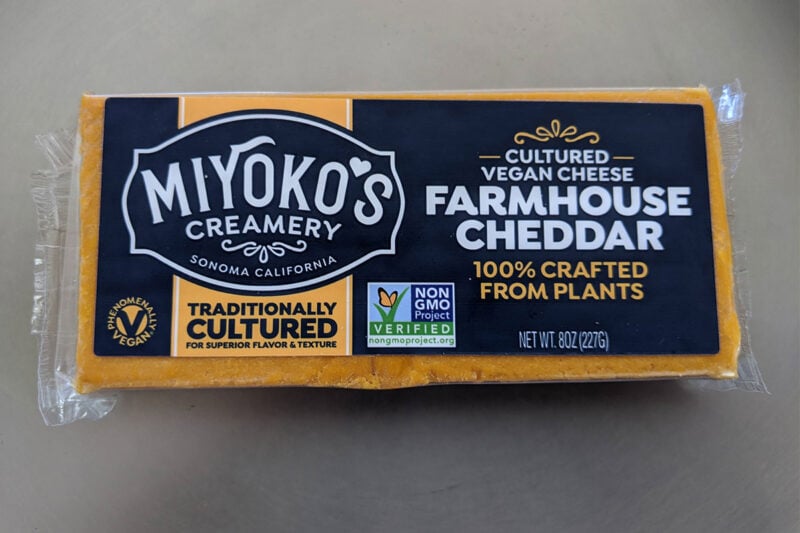
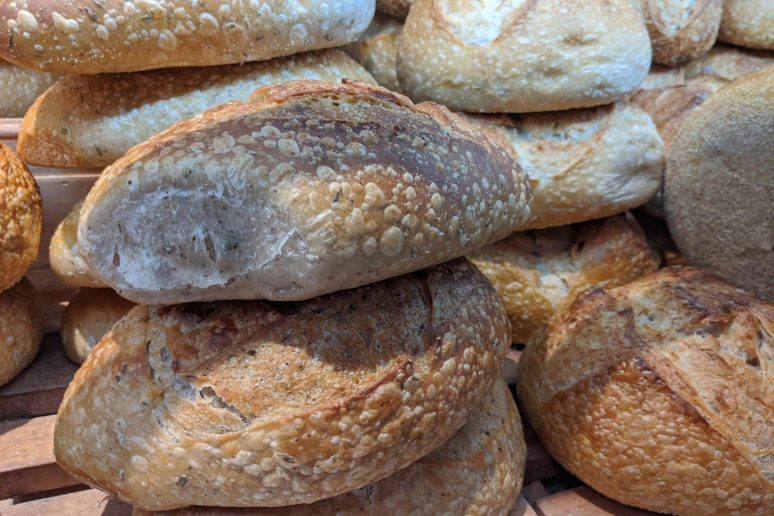
Vegan bread comes in endless varieties, in styles originating from every corner of the world. Here’s everything you need to know about buying it or baking it yourself.
Is Bread Vegan?
A few types of bread are nearly always vegan. But for most varieties, you must check the ingredients to know for sure. The things to watch for are the typical vegan nemeses: milk or egg products. Honey also shows up in whole grain breads with distressing regularity.
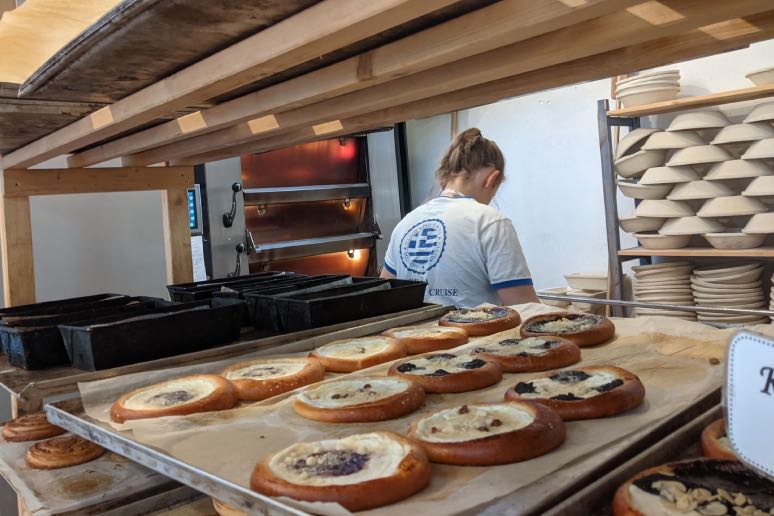
Which Breads are Reliably Vegan?
If there’s one thing every vegan learns the hard way, it’s that animal products lurk everywhere. That said, you can usually count on these kinds of bread to be vegan:
- White flour bagels
- Baguettes
- Pizza crust
- White sourdough bread
- Pita bread
- Ciabatta (Italian white flour rolls)
- Simit (Turkish ring bread)
- Any sort of rye or pumpernickel bread
- Anything you make yourself!
Here are some other bread varieties that are often vegan:
- English muffins
- Sandwich Breads
- Muffins
- Rolls
- Biscuits
- Cornbread
- Hamburger and hot dog buns
Croissants traditionally contain a lot of butter, so they’ll never be vegan unless prominently labeled as such. Fluffy breads like challah and brioche are made with eggs. And very shiny breads have usually been glazed with egg whites.
Vegan Flatbreads
If you’re thinking about vegan breads, flatbread might not even cross your mind. But don’t neglect this niche, since it offers an incredible assortment of delicious vegan possibilities.
A number of cuisines feature a variety of flatbreads. Some flatbreads use leavening while others are more akin to crackers.
- Pita bread and lavash (Middle East)
- Corn and wheat tortillas (Mexican)
- Chapatti, naan, roti, dosa, paratha (Indian)
- Injera (Ethiopian)
- Matzah (Jewish)
Let’s quickly go through the above varieties.
Pita Bread
Pita’s maybe the most interesting of the bunch. It’s sometimes called “pocket bread” since you can tear off an end and stuff the inside with your favorite fillings. As a Middle Eastern bread, pita’s most common fillings are falafel, hummus, veggies, tahini, and hot sauce. Finding a falafel place that makes its own pita should be on your bucket list, since commercial brands just don’t compare.
Lavash
Another Middle Eastern flatbread. When falafel isn’t being stuffed into pita, it’s often being made into a lavash wrap—similar in shape to a burrito but with the ends left open. Better restaurants will put the finished wrap onto a grill before serving, crisping up the wrap and giving it appealing black grill marks. Lavash is almost always made from white flour, which means it’s strong enough to make a well-stuffed wrap that won’t fall apart.
Mexican Tortillas
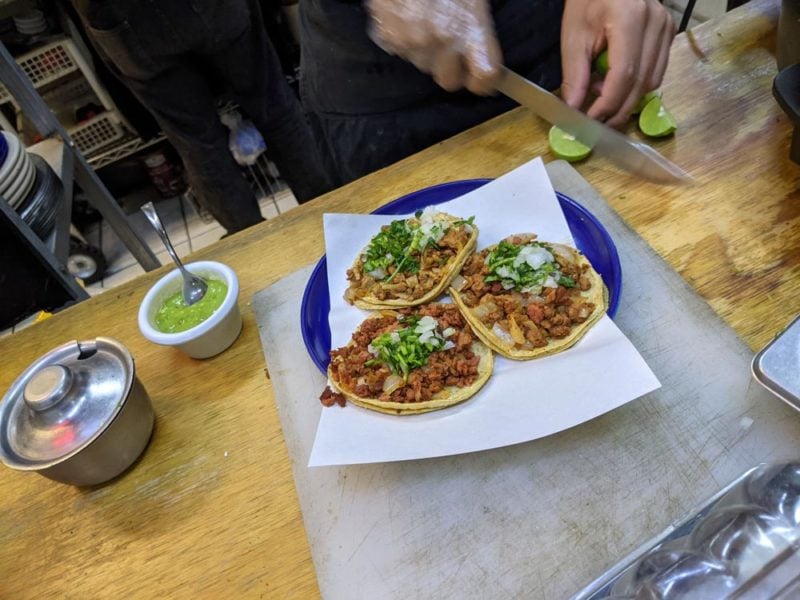
Corn tortillas rank among the most important staples of Mexican cooking. Walk around any Mexican neighborhood in the morning and you’ll hear the squeaky machine of a local tortilla shop, popping out a fresh hot tortilla every second or two. You can buy ten or twenty for an improbably tiny amount of money, which they’ll wrap in paper. I think the only way to buy tortillas is to get them fresh or to make them yourself using masa harina cornflour. You can slice up and fry tortillas into delicious corn chips. Several popular Mexican dishes—including tacos and enfrijoladas—use corn tortillas as a primary ingredient.
Wheat tortillas are a more recent invention, which many people prefer over corn. Because wheat contains gluten, wheat tortillas can be made much larger than corn tortillas. This in turn makes them suitable for burritos and an infinite assortment of vegan wraps.
Indian Flat Breads
No region of the world has a longer or more impressive cooking history than India. But because conventional ovens didn’t show up in India until modern times (and still aren’t found in many Indian kitchens today), loaf-style breads never became part of this cuisine. So Indian chefs channeled their bread-baking aspirations into a vast variety of flatbreads, some cooked on skillets, some in tandoori ovens, and some deep-fried. It’s safe to say that Indian cooking is the preeminent flatbread cuisine.
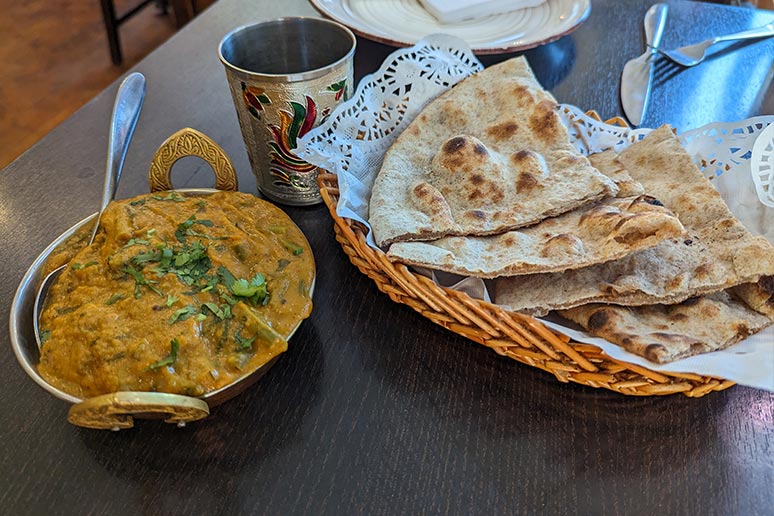
Some flatbreads like chapati and naan are deliberately bland and meant to accompany spicy main courses. But the majority of Indian flatbreads are remarkably flavorful and incorporate a multitude of delightful textures. Most Indian flatbreads are vegan-friendly, like naan or parathas, may contain dairy ingredients like yogurt, ghee, or paneer.
Injera
The classic Ethiopian meal involves several types of spicy stew scooped out as dollops atop a gigantic “Injera” pancake, which is about the size of a pizza. Injera is made from whole grain teff, which contains even more protein-rich than wheat. It’s a very sour bread because the batter ferments for a day or more before being cooked.
Go out of your way to try Ethiopian food, since it’s super vegan-friendly and unlike any other world cuisine.
Matzah
This is the least exciting flatbread of the bunch. It’s essentially a large, bland, unleavened cracker. Matzah persists in Jewish culture largely as an historical reminder of what unlikable guys the Pharaohs were. Many Jews buy a box for Passover, and enjoy tastier breads the other 364 days of the year.
Where Can You Buy the Best Vegan Bread?
The very best place to buy bread is from an independently-owned local bakery. These shops almost never disappoint and they consistently bake better bread than bakeries that have multiple locations. Bread machines just can’t compete with what a good local bakery can produce. And unless you have lots of practice baking bread, you probably can’t compete either. After all, the people who run these places are professional bakers who have mastered their craft.
There is no comparing any mass-produced bread to what a competent small bakery can produce. Bread purchased at a bakery is often still warm from the oven, especially if you visit right when the shop opens. The person at the counter of your local bakery is often knowledgable about the baking process and will know the ingredients and each loaf’s vegan status.
Every small bakery is different. One might specialize in classic French baking, while another might do Russian-style sourdough loaves in a brick oven. There’s no cheaper way to get ahold of truly gourmet food than by buying just-baked bread from your local bakery. So it’s well worth spending a few minutes on Google Maps searching for bakeries, and giving the nearest ones a try.
What Big Bakeries are Vegan?
Dave’s Killer Bread is a superb brand made from organic whole grain ingredients, and it’s available throughout the United States. Except for their Honey Oats & Flax bread, which obviously contains honey, all Dave’s products are vegan.
Food for Life makes Ezekial 4:9 breads, English muffins, pita bread, and burger buns. The company’s entire product line is vegan. Many natural food stores carry these breads, which they keep in the frozen foods section.
You’ll have to read labels, but most natural foods stores will also sell at least one local brand of whole grain bread that’s vegan.
Nearly all freshly-baked white flour baguettes made by regional bakeries are vegan. Just check the label to be sure. Similarly, you’ll want to ask to confirm, but nearly all your local bagel shop’s offerings should be vegan as well.
Bread Machines
If you’re a huge bread lover, consider making your own. Nothing compares to bread that’s still warm. And baking your own bread gives you total control over its ingredients. Best of all, homemade bread costs less than half the price of store-bought.
Baking bread at home is either ridiculously easy or prohibitively labor-intensive depending on whether you own a bread machine. Bread machines eliminate mixing, kneading, oven preheating, and even keeping track of time. It takes just a couple minutes to start a loaf. After that, the machine does all the work for you, baking each loaf to perfection. Cleanup is easier too, since there are no cutting boards or mixing bowls to deal with.
For one or two person households, get a bread machine that can make smaller loaves. Larger households ought to consider investing in an upscale model like this Zojirushi Home Bakery machine. The added costs gets you features and versatility you’ll appreciate.
Baking Vegan Bread at Home
Bread machines are among the most amazing kitchen appliances ever invented. That said, no hobby offers greater pleasure than baking bread by hand. And machines won’t attain perfection when it comes to spitting out an authentic artisan sourdough loaf.
There’s no getting around the fact that baking loaves of bread from scratch takes time and demands some skill. For a much easier project, you should try making pizza dough from scratch. All you need is bread flour, yeast, and a bit of sugar. Making pizza at home is much easier than it looks. Once you knead the dough, let it rise, and then roll it out, it takes just a minute to spread on the sauce and the toppings. And if you want to cut corners without anybody noticing, most natural food stores sell pizza dough in their refrigerated section—just roll it out and it’s ready to top and to bake. Be sure to dust the pizza pan with cornmeal to prevent sticking.
If you want to try your hand at baking bread from scratch, here are some excellent cookbook recommendations.
Vegan Bread Cookbooks
There are several excellent vegan cookbooks that specialize in breads and baking:
- The Homemade Vegan Pantry, by Miyoko Schinner
- Modern Vegan Baking, by Gretchen Price
- Vegan Baking for Beginners, by JL Fields
- Whole Food Vegan Baking, by Annie Markowitz
Gluten-Free Vegan Bread
Choosing spelt rather than wheat will slightly reduce the amount of gluten in your bread, and what gluten spelt does contain takes a more digestible form. Most bread recipes work well enough if you swap in spelt.
However, if you suffer from celiac disease, spelt isn’t a solution since even a little gluten is too much. Many cities have gluten-free bakeries. These shops follow strict protocols to banish even traces of gluten from their kitchens. To find your nearest gluten-free bakery, search Google Maps.
Additionally, check out these gluten-free vegan bread cookbooks:
- Gluten-Free Vegan Bread, by Katzinger & Barnard
- Bread and Butter, by Erin McKenna
The Outer Limits of Bread
This article has no space to cover the endless assortment of bread-like foods. But for the sake of wrapping things up we might as well end by mentioning quick breads, in which baking powder replaces yeast as the leavening agent. As its name implies, quick breads are easier and faster to make than yeast breads since you don’t have to “wake up” the yeast with warm water and wait for fermentation to produce carbon dioxide. Instead, the heat of cooking causes the baking powder to immediately release carbon dioxide.
You can think of pancakes as a type of quick bread, since they are typically cooked on a griddle and leavened with baking powder or baking soda. Donuts are a beloved deep-fried quick bread, and yeasted donuts put us back into the realm of conventional breads. And maybe it’s stretching the definition a bit, but I think we can reasonably consider most types of pastries to be a sort of bread.
One of the most popular sayings about this food is, “give us this day our daily bread.” Since a huge portion of the world population eats some form of bread on a daily basis, how fortunate we are that bread comes in unending varieties.